

I'm standing in the middle of a sun-drenched old army hangar. A dozen guests, many in cowboy hats and boots, whisper and float through the room to observe the art from different angles. My attention keeps slipping towards a surprising object tucked away by one of the walls: an elevated wood bed.
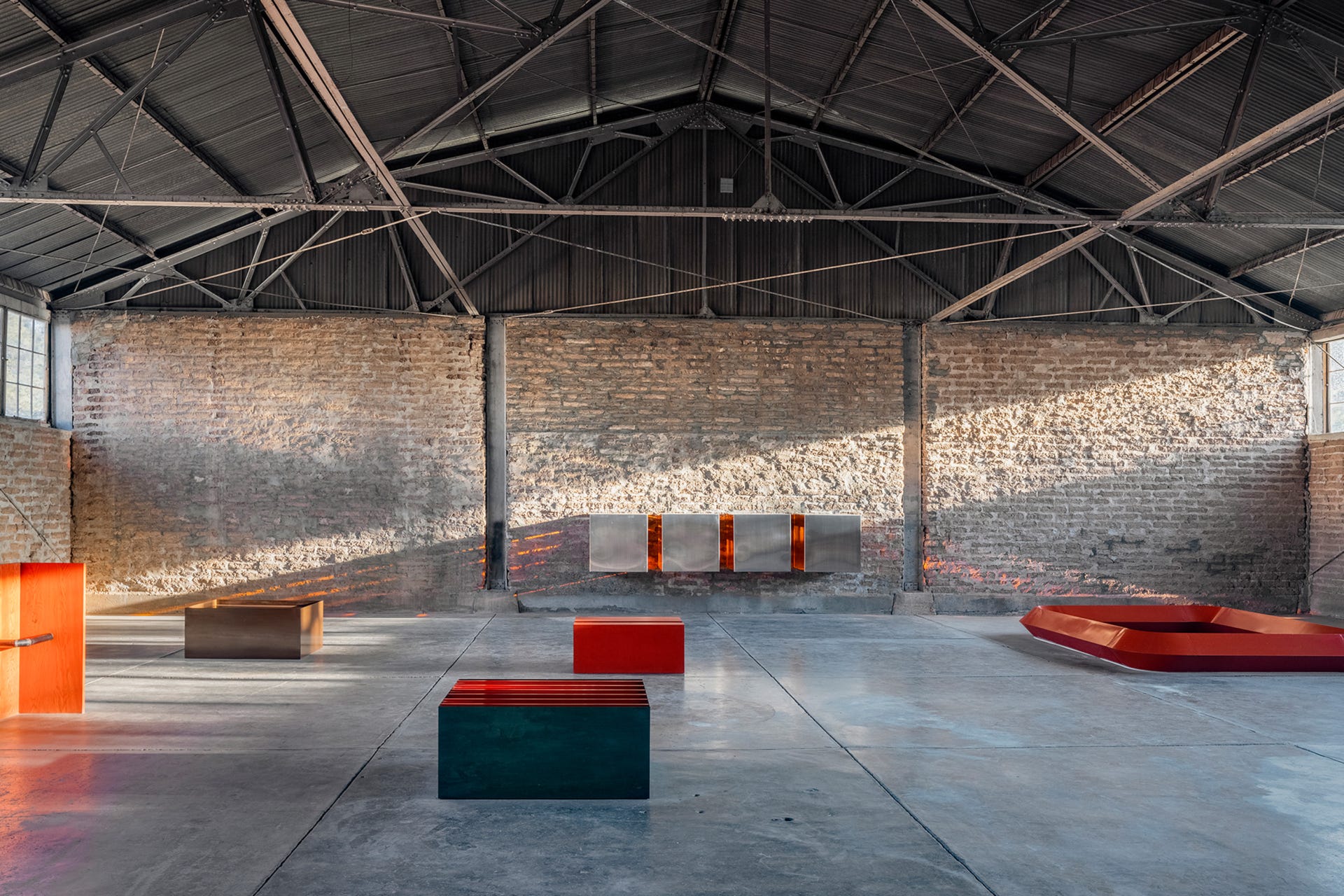
The tour guide soon addresses my unspoken curiosity: the owner of the house, artist Donald Judd, used to spend hours on that bed, contemplating his art arrangement and making changes over time. It often took him years of reflection to finalize the precise placement of objects in a given space.
“The space surrounding my work is crucial to it: as much thought has gone into the installation as into a piece itself” — Donald Judd, 1977
This experience left me surprisingly touched. It accidentally relieved some pressure from a stress I commonly experience at work: the need to make terminal design decisions. Working with real estate, I often struggle with making fast and definitive choices. I prefer to take my time, meditating for a while on how a space makes me feel. At times, I feel a bit embarrassed by my indecisiveness, worrying about an inadequacy in experience, training, or imagination. This visit to Judd's home and studio felt like a deliverance of sorts. A liberation not to have all the answers upfront.
If Judd, with his decades of experience, needed years to live with a space to understand and refine it, more projects would benefit from the same approach than not. Every new building brings about a lot of surprises: some lucky ones, others not so much. How it feels, how it sounds, how it smells, how it shakes, how a breeze passes through it, how the daily rituals change it…
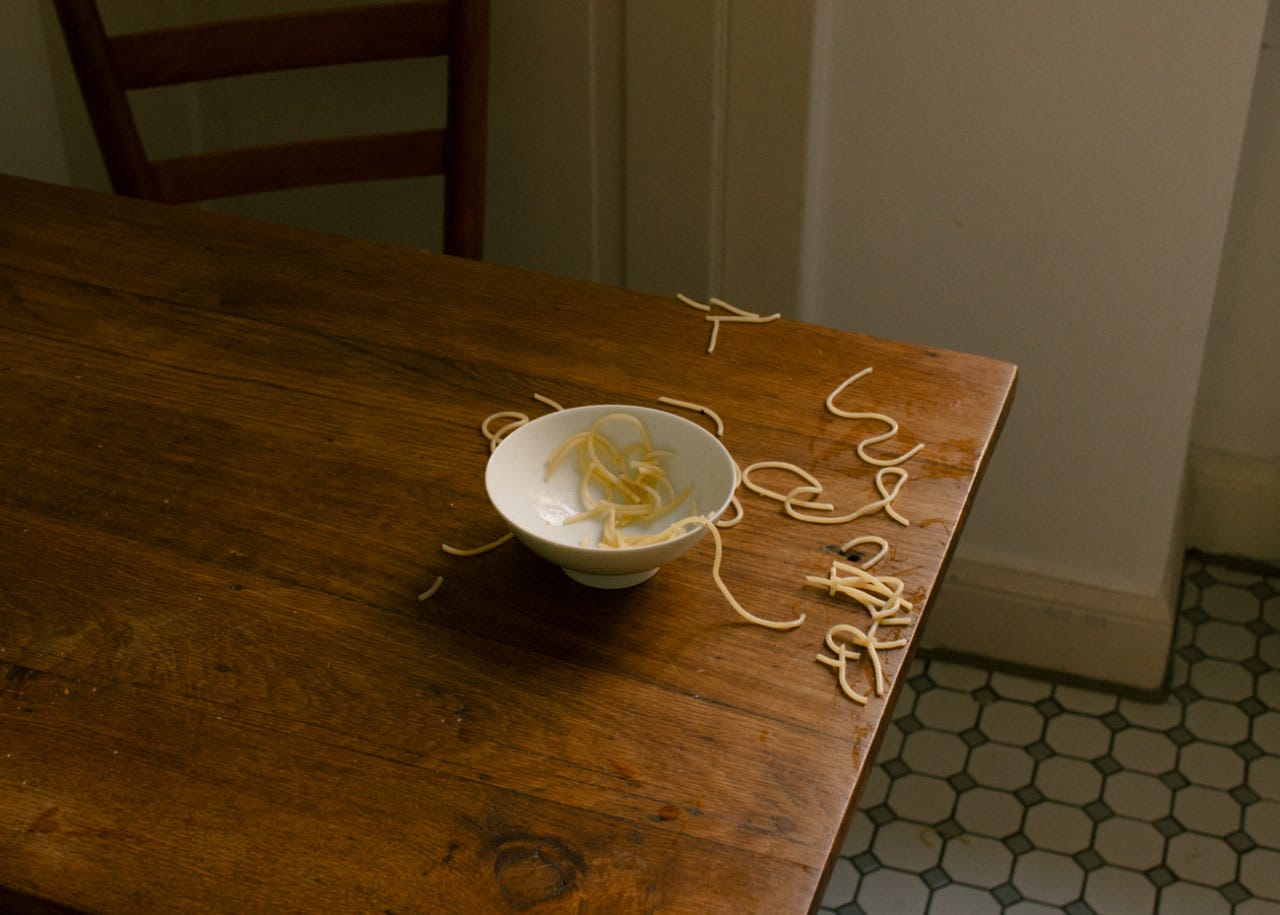
The projects that are treated as rigid upon completion have a higher chance of running into issues that ultimately undermine the original plans. Like the desire lines cutting through grass next to the “permanent” paved paths.
Ironically, it’s the spaces that are initially treated as impermanent that have a shot at arriving close to a lasting equilibrium with how people actually live.
This may be one of the reasons why the homes and studios of architects and artists attract so much reverence. They are a rare window into how designers evolve their environments when given an opportunity to live with them long enough.
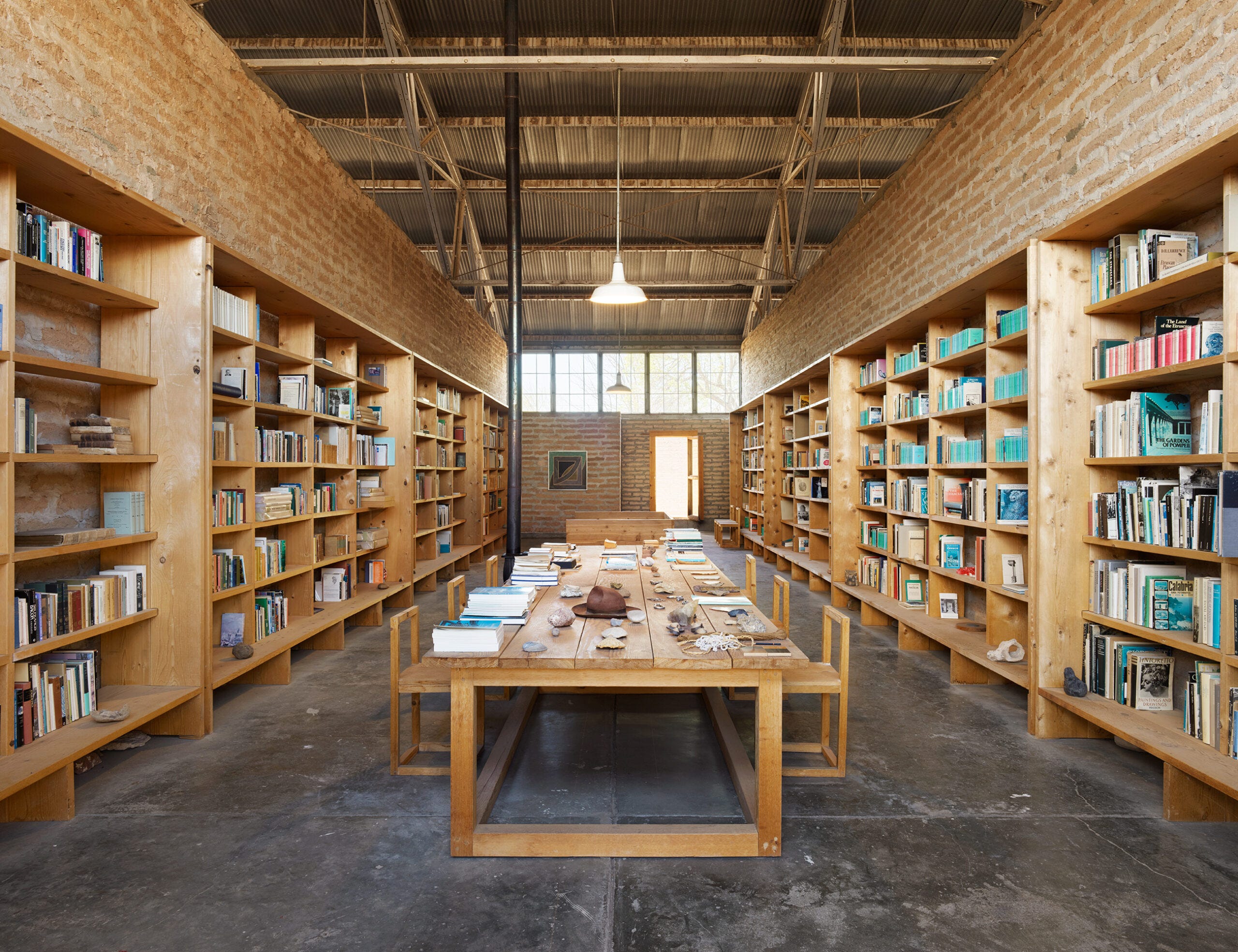
Among my favorite discoveries from Judd's home in Marfa, TX were the bookshelves he designed using the local pine stock. The top shelf was extended to protect the books from the hangar's leaking roof, and the bottom — to act as a splash guard from the puddles that formed on the floor. This is so endearing to me, I don't know how one can design a bookshelf with a splash guard without first losing a few precious books to a storm.
It would be wonderful for the “design oversight” to be extended past the construction stage into occupancy as a standard industry practice. Unfortunately, having designers continuously refine a space after it’s built, rented, or sold is rarely possible.
The nature of the real estate business requires a certain finality in most creative decisions. Permits, budgets, and procurement schedules embalm the space in its final form long before it rises from the ground. The iterations happen early on, based on the team’s experience, virtual tests, and other explorations. Once a building is complete and the furniture placed, the design control is relinquished almost entirely. In the absence of living and changing with the space, the best alternative is to pass at least some of the learnings to the next projects.
Personally, the ability to improve design over time has long been attracting me to work on repeatable or similar buildings. Samara started with a pursuit of a reconfigurable kit of parts that eventually settled on a limited set of plans; Apt looked at standardizing low-rise multifamily walkups; Neutral is working on a flexible yet repeatable building system for mid-rise multifamily; and American Housing builds exclusively three-story rowhomes. On the surface, it may look like a pursuit of quantity, cost efficiency, and scale. For me, it’s an incremental search for harmony.

I left Marfa with a renewed sense of joy and lightness. Working on buildings will always require a lot of finite decisions with limited information, but it’s much easier to do with a humble stance of “doing what you can and come what may”. Making our best effort and then letting the spaces surprise us.
— FN
P.S. special thanks to Jeff Wilson for helping me get into the tour group at the very last minute.